Friday, January 16, 2015

GN review: "The Undertaking of Lily Chen" by Danica Novgorodoff

In my continued effort to read more graphic novels I bring you today's review. It's going to be a short one because it's not a 1000 pager by any means.

Wei is the second son in a Chinese family. Tragedy strikes his older brother and he is burdened with a strange task, finding him a corpse bride.

He only as a short time frame to get find one, so he immediately sets out towards the countryside. He has to tread carefully because there are people looking for him from his job, and because the corpse bride concept is an old one and is shunned in many places.

On his journey he finds Lily. Lily is beautiful but she's also impulsive, loud, not very careful and sometimes gets him in trouble.Sometimes meaning always. And though he's falling in love with her he knows he has to kill her.

I thought this was a fun read. Fast, interesting, and a bit of a love story! 3.5 out of 5 stars!


Also, do I love this cover? Yes, yes I do.


17934370

Wednesday, January 14, 2015

A Few Books I'm Looking Forward to Reading This Year

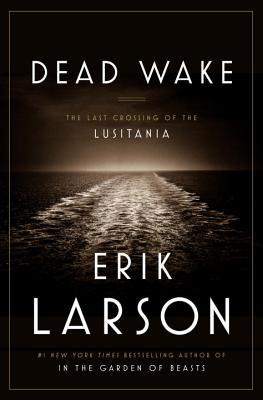
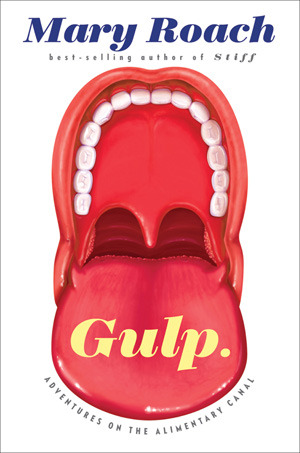
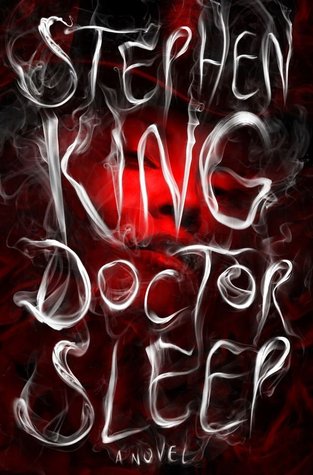
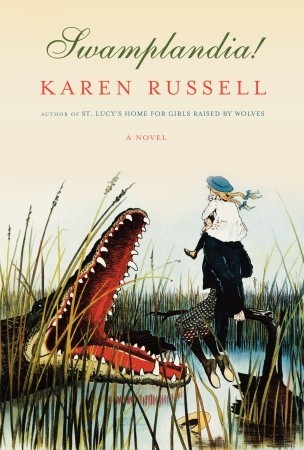
Not necessarily books being released new this year (though some are) but books that are at the top of my TBR to take on this fresh new year! Anyone read any of the already released books?

15819606


15702038

22551730

(I have tickets to go to a book signing with him in March with my ma!)

13615414

73698

(Between the time I actually wrote this post and now I did read this one!)

16130549

8584686


Monday, January 12, 2015

Book Review: "Four Seasons in Rome: On Twins, Insomnia, and the Biggest Funeral in the History of the World" by Anthony Doerr with bonus movie talk

We'll start with the movie talk.My husband and I went and saw The Imitation Game on Sunday (while everyone else was watching the Packer game, an infinently better use of time in my non-football caring opinion.) It's really a remarkable movie. And just heart curshing sad. There will be Oscar buzz. See it now.

---------

After reading and thoroughly enjoying Anthony Doerr's "All the Light We Cannot See" I decided to seek out more of his work. When I saw this book I said "That's a Bingo!" and immediately requested it from the library.

This is a fun little bit of nonfiction. Anthony was awarded a special award from the American Academy of Arts and Letters, it was an apartment and a stipend to live in Rome for one year. He, his wife, and his infant twins pack up their lives and move to Rome for the year.

(It's funny because he works on reading and writing a book the whole time that he is in Rome. The book ends up being "All the Light We Cannot See." When he talks about writer's block or insomnia I want to be like "You can do it! Stick with it! It's going to turn out really great!")

His family really makes the effort to integrate into Roman society and learn Italian. Though at least once there was a mix up with the Italian word for "sauce" and "grapefruit". As in "I want grapefruit with mushrooms". (No you don't. You really don't). All of the locals that they come in contact with say how beautiful the kids are, and they even bond with the parent's of other twins in their neighborhood. They try to encourage them that someday they will sleep again!

They happen to be in Rome when Pope John Paul II dies. The descriptions of the crowds, the rituals, the funeral, and all of the media's swarming of the Vatican was really interesting. I remember it being on CNN 24/7 so it was interesting to see a "local" perspective.

I've never been to Rome, but when I go there will be one thing I will keep my eyes open for; 220 plaster flowers the size of patio tables on the underside of a Michelangelo carved  cornice at the Palazzo Farnese.

I love how Doerr writes. Here's one of my favorite sentences describing when he and his wife managed to get a few minutes in an empty gallery at the Sistine Chapel: "It's darker than I thought it would be, and rawer, and older. It smells like musty newspapers." Also this sentence when he talks about when he, his wife, and his twins all were sick with the flu: "It feels like we have been locked in a trunk this is slowly sinking towards the bottom of the sea." I know I've felt like that when I didn't feel good.

I loved this book for it's glimpse into everyday Roman life, and an author's writing process. I highly recommend it. I will seeking out other books by him now as well! I give it 4 out of 5 stars!


137852

Friday, January 9, 2015

Book Review: "Unnatural Selection: Choosing Boys Over Girls, and the Consequences of a World Full of Men" by Mara Hvistendahl

In the year and a half (?) that I've been reading blog friend Shannon's River City Reading  I've noticed that she finds ( or knows people who find) the most interesting nonfiction reads. Of all of the recommendations I've taken from  her I think that this book was the best one that I've read. Which is not to say that this book didn't make me angry or sad or frustrated - because it did - but holy cow was it interesting and did I learn a lot.

There's a lot of talk about abortion in this book.I think that no matter no matter how you feel about abortion that some or all of these stories will sicken you. I know it did for me. I'm pro-life,but even if I wasn't I think my heart would ache for these lost lives and the squandered potential. I kept thinking "What if that little girl could have cured AIDS? Or developed a cancer vaccine? Or was a wonderful human being/daughter/sister/wife/friend that people loved to be around?" It just made me sick to my stomach. 

Though occasionally the scenarios and stories were hard to stomach I am so glad I read this book. I learned so much. And it answered the question that I always think of when I think of "boycentric" societies; "Who are these little boys grow up to marry and reproduce with if all there are are other little boys?!"

This book covers a huge array of topics in a really thorough but well paced way. There's no way to cover it all in a efficient manner so I'll just spotlight a couple and hope that it's enough to intrigue you!

* "Boys outnumber girls at birth, but men outnumber women in early deaths". Why? One reason, still the majority of soldiers are men. Also, motorcycles (ok, that's me editorializing a little but that has to be a reason.)

*When thinking of societies where baby boys are desired over baby girls the first countries that come to mind might be China and India. You're not wrong. What I thought was really surprising that the next 3 countries with very skewed sex ratios: Armenia, Georgia, and Azerbaijan. Many thoughts and pages go into figuring out what (if anything!) these places have in common. They also have abortion statistics from the United States that they compare with these countries and the differences are staggering.

*"Scholars have begun to calculate the impact of tens of millions of surplus men will have on everything from health care to crime. Historically, societies in which men substantially outnumber women are not nice places to live. Often they are unstable.Sometimes they are violent." No.Joke. Unfortunately we have plenty of examples.

*A doctor in Asia talks about why he performs sex-selective abortions: "You can be aborted as a conceptus, you can be killed at birth, or you can be sold into slavery and die in a slum someplace...It would be interesting to know how many females you're keeping out of hideous situations". Many girls who are born into families desperate for boys are born into bad, sometimes desperate situations. Some are sold into marriage by their families to foreign men who are already having trouble finding single women to marry due to the high favoritism towards boys. Some times families will try for girls, because the daughters who are married off (to sometimes wealthier men) will send back money to support their families back home.

I have so many more sticky notes in this book that I could talk to you about but I don't want to tell you everything. (Also, the sticky notes I was using are blue! Subliminal messages?!) This is an issue that could potentially affect millions of people and life as we know it. My husband and I aren't planning on having kids, but after reading this book I was like "No! We have to have a whole mess of little girls to even things out!" But then I remembered that I am 4th in a family of four girls so I feel like my family has done their part :) A high 4 out of 5 stars!

Have you ever read a book that really saddened or maddened you but you are still really happy you read it anyway?

11467568

Wednesday, January 7, 2015

Book Review: "Brave Genius: A Scientist, A Philosopher, and Their Daring Adventures from the French Resistance to the Nobel Prize" by Sean B Carroll


Albert Camus and Jacques Monod were probably not two people who you would have randomly thrown together to be bestest of friends and yet these two men were bonded for life by extraordinary, sometimes terrible, events. The fact that they each lived through WWII to be friends beyond those dark days was an achievement on it's own! I'm going to break each of the men down separately and then we will get them together.

Albert Camus was born in (French) Algeria in 1913. He grew up incredibly poor. When he was younger he was an ardent Communist (this would change). He was married twice, and fathered twins with his second wife, but he juggled so many lovers and mistresses that I don't know how he kept them all straight.

Jacques Monod was born in Paris to a French father and an American mother (from Milwaukee, no less!). Incredibly bright from a young age he studied biology at Sorbonne before the war. He was married and had children. I'm not going to pretend to really comprehend what he studied but it was genetics and DNA related.

But that's almost all in the future. Our story begins as the Nazis stomp their way into France. Both men are in Paris, and witness the occupation. Both men want into the Resistance. They worked for underground newspapers, they helped coordinate parachute drops, they passed along information in many ways. They risked their lives everyday. They grew close and even after the war ended were like brothers. They once went out to dinner with 2 other men to discuss something, and the 2 other men both commented on the men's connection. That they could finish each other's sentences, and seemed to guess what the other one was thinking. 

Both men would win a Nobel Prize; Albert in 1957 and Jacques in 1965.

I wanted to adore this book but it didn't quite happen. There were things that I really liked about this book. There were little tidbits of great World War II information spread through the first part of the book. There's talk about all kinds of naval skirmishes and attacks up in the scandinavian country area that I had never heard about, for example. Or Monod's risking almost everything to help a scientist get out of occupied Hungary after the war ended. When it kind of lost me was when it would get really heavy into the science, especially when the book just focused on Monod a little later in life. It was a little much for this science illiterate. I give it a high 2 or low 3 stars? It should probably be higher but it was really just dragging for me by the end. If you'd ask me to rate it it in the middle I'd probably give it a 3!

Also, doesn't Camus kind of look like Topher Grace in this picture?


17262116
I received a copy of this book for free in exchange for a fair and honest review from Blogging for Books

Monday, January 5, 2015

What I Want for the Blog (and Myself) this Year

Brainstorming on things I want for me and the blog and my book reading for the year:

I want more variety in posts. I need to remind myself that there are tons of ideas out there for posts on book blogs and that it's okay to use them!

Maybe even throw in a not book related post, just for insanity and shock! They probably won't be cooking related though!

I want to really make All Lady July great this year. I am encouraged by the great reception it had for it's inaugural last year. I'd love for people to guest post about their favorite female authors, what diversity in books means to them, favorite strong female literary characters, whatever! I'd really like to have a post everyday and make All Lady July the best it can be. If you want in, give me a holler.

I want to learn how to arm knit. I think it looks really fun and I like how the end products look but I'm far less confident in my abilities to follow a youtube tutorial. We shall see!

I have so many half finished craft projects. I need to sit down and evaluate them all and see if some are worth finishing, pillaging for parts or just being done with. It kind of makes me feel like a failure to have so many things half done so I just kind of want to be rid of it.

Here's the tutorial I'm using from Simply Maggie if anyone else wants to learn!

So that's whats on my mind for the new year right now. and also about a thousand other things. What about you?

Friday, January 2, 2015

Book Review: "The Oblate's Confession" by William Peak (HFVB)

Before we start, let's turn to handy dandy Wikipedia to get the actual definition of Oblate, shall we?

"Oblates are individuals, either laypersons or clergy, normally living in general society, who, while not professed monks or nuns, have individually affiliated themselves with a monastic community of their choice. They make a formal, private promise (annually renewable or for life, depending on the monastery with which they are affiliated) to follow the Rule of the Order in their private life as closely as their individual circumstances and prior commitments permit. Such oblates do not constitute a separate religious order as such, but are considered an extended part of the monastic community."

Basically that's what we're working with here. Our narrator, Winawed, is "gifted" to a monastery at a place called Redstone by his father, in thanks for a favorable result in battle. He goes at a very young age and has almost no recollection of his life outside the monastery. 

There are a couple of interesting things about this monastery. The monks rarely talk, they communicate with somewhat elaborate hand signals. When they are talking, they are really chanting and are almost exclusively doing it at prayers. Another thing that I thought was interesting was that the monastery is very insulated. I guess I always supposed that almost all monasterys did work with the community they were in, outreach or charitable work or something. These monks seemed to go out of their way to really avoid the people in the area.

Anyway, so this is where our narrator spends his whole life. He is with the monastery through all kinds of ups and downs, including at least 2 bouts of plague, almost starving a few times and barely escaping a very serious explosion.

His life takes a bit of a turn when his father, who he doesn't know, comes to visit him at the monastery. He asks something of the young boy that causes him all kinds of inner turmoil and that he reflects on at length throughout his confession. He was really upset by it, so you kind of think he did something insanely bad, like setting an orphanage on fire. It's not that bad.I mean, it's not nice, but it's not orphanage arson bad.

My one criticism of this book is that it would have been nice to have a glossary of terms, or something of the like. There is a very helpful map, and a list of characters. However it would have been nice to have something that translated some of the other Latin words that were used around the monastery.

Summary
Set in 7th century England, The Oblate’s Confession tells the story of Winwaed, a boy who – in a practice common at the time – is donated by his father to a local monastery. In a countryside wracked by plague and war, the child comes to serve as a regular messenger between the monastery and a hermit living on a nearby mountain. Missing his father, he finds a surrogate in the hermit, an old man who teaches him woodcraft, the practice of contemplative prayer, and, ultimately, the true meaning of fatherhood. When the boy’s natural father visits the monastery and asks him to pray for the death of his enemy – an enemy who turns out to be the child’s monastic superior – the boy’s life is thrown into turmoil. It is the struggle Winawed undergoes to answer the questions – Who is my father? Whom am I to obey? – that animates, and finally necessitates, The Oblate’s Confession.
While entirely a work of fiction, the novel’s background is historically accurate: all the kings and queens named really lived, all the political divisions and rivalries actually existed, and each of the plagues that visit the author’s imagined monastery did in fact ravage that long-ago world. In the midst of a tale that touches the human in all of us, readers will find themselves treated to a history of the “Dark Ages” unlike anything available today outside of textbooks and original source material.

About the Author
William Peak spent ten years researching and writing The Oblate’s Confession, his debut novel. Based upon the work of one of the great (if less well known) figures of Western European history, the Venerable Bede, Peak’s book is meant to reawaken an interest in that lost and mysterious period of time sometimes called “The Dark Ages.” Peak received his baccalaureate degree from Washington & Lee University and his master’s from the creative writing program at Hollins University. He works for the Talbot County Free Library on Maryland’s Eastern Shore. Thanks to the column he writes for The Star Democrat about life at the library (archived at http://www.tcfl.org/peak/), Peak is regularly greeted on the streets of Easton: “Hey, library guy!”

Displaying 02_The Oblate's Confession.jpg


The Oblate’s Confession Blog Tour Schedule

Monday, December 1
Review at Broken Teepee
Tuesday, December 2
Spotlight & Giveaway at Passages to the Past
Wednesday, December 3
Review at Back Porchervations
Review at A Fantastical Librarian
Thursday, December 4
Spotlight at What Is That Book About
Friday, December 5
Interview at Back Porchervations
Monday, December 8
Review at A Book Geek
Tuesday, December 9
Review at The Writing Desk
Spotlight at Historical Tapestry
Thursday, December 11
Interview at Forever Ashley
Monday, December 15
Review at Flashlight Commentary
Tuesday, December 16
Spotlight at Bibliophilic Book Blog
Thursday, December 18
Review at 100 Pages a Day…Stephanie’s Book Reviews
Guest Post at Books and Benches
Friday, December 19
Review at Book Nerd
Review at bookramblings
Monday, December 22
Spotlight at Let Them Read Books
Tuesday, December 23
Review at Just One More Chapter
Wednesday, December 24
Review at With Her Nose Stuck in a Book
Monday, December 29
Review at The Never-Ending Book
Tuesday, December 30
Spotlight at Historical Fiction Connection
Friday, January 2
Review at Library Educated
Monday, January 5
Review & Interview at Words and Peace
Tuesday, January 6
Spotlight at CelticLady’s Reviews
Wednesday, January 7
Review at A Bibliotaph’s Reviews
Thursday, January 8
Review at Impressions in Ink
Friday, January 9
Review at The True Book Addict
Review & Interview at Jorie Loves a Story