Showing posts with label author interview. Show all posts

Monday, September 21, 2015

Author Interview: Juliet Waldron of "A Master Passion: The Story of Alexander and Elizabeth Hamilton" (HFVBT)

Displaying 04_A Master Passion_Blog Tour Banner_FINAL.png


I have an author interview for you today! Here's the goodreads summary of Juliet's book and then the interview:


THE MASTER PASSION is the story of the marriage - called by some a misalliance - of Alexander Hamilton, our First Secretary of the Treasury, and Betsy Schuyler. Although born poor and illegitimate, Hamilton courts the daughter of Major General Schuyler, an American princess.


Hamilton is one of a trinity of Founders who seem to have been created on purpose to invent our nation. Like all mission-driven men, he is preoccupied, often absent, and not the best provider. The trials of making ends meet and raising an ever growing troop of children are Betsy's. This woman-behind-the-man is barely known, but through war, Indian attacks, multiple births, epidemics, infidelity, unending politics and dire tragedy, Betsy is the force which holds the family together.


Conflict is built into this marriage. It does not simply spring from Alexander's childhood experience of bastardy, abuse and abandonment. 

------------------------------

Hello, Library Educated, and thanks for having me on to talk about A Master Passion, the story of Alexander and Elizabeth Hamilton. In the days before so much historical source material was scanned onto the ‘net, I couldn’t have written this book without access to The PA State Library and the Lebanon Valley College Library collections. (Libraries to the rescue!- W)

1. How did you hear about this extraordinary couple's story?
I’ve been a Hamiltonian since I was eleven—which sounds mad, but there it is. I actually visited Nevis, Hamilton’s remote West Indian birthplace, in 1957, thanks to a mother who fostered my historical fascinations. Only when I’d begun to work on A Master Passion in the early ‘90’s did I become more heavily involved with Betsy’s story. Like other 18th Century wives who wanted to preserve family privacy, (for instance, Martha Washington and Constanze Mozart) Betsy destroyed personal correspondence with her own “great man.” I had to sometimes make inferences about her take on events.  Betsy lived fifty years beyond her husband’s fatal duel, so her “American Experience” stretched almost to the Civil War. She never ceased to demand that ‘Justice shall be done to the memory of my Hamilton.’

2. What marriage advice to you think that Alexander and Elizabeth would give to couples today?

Manners and morals have changed, but I have a few ideas. Like many married couples then and now, the Hamiltons grew together as the years passed. Keeping the marriage going, the sometimes rocky “for better, for worse, for richer, for poorer, in sickness and health, ‘till Death do us part”, was of prime importance to them, although they were sometimes tested. Elizabeth knew how to forgive; she also had to learn how to live with a preoccupied genius.  Hamilton loved, trusted and respected his wife—and 18th Century husbands did not necessarily work at those things. Those two parts put together created a working whole.

They might give advice about the importance of being attentive to children, too, because they were—again, particularly for this century--involved parents. This did not stop with their own children, for their house was often full of other people’s as well.  Many of Betsy’s nieces and nephews lived with them at various times, and they fostered an orphaned girl until she grew up and got married.  

3. Where there any unique challenges about writing this book that you didn't have in other books you've written?

The balance between the couple was often hard to maintain. I’ve a natural sympathy and interest in woman’s experience of life in the past, as well as in the complications that come along with a female body. This book is also the first of mine in which I’ve stayed, for long periods, in the POV of the male half of a relationship. Not so much the maleness, but the genius aspect was the intimidating part.
4. What kind of research did you have to do for this book?

Lots! However, total immersion is my chosen method when I’m writing what I like to think of as “bio-fic.” There is a great deal of primary and secondary source material on Hamilton, now far more easily accessible than when I began. And Betsy saved her husband’s correspondence. After his death, she hunted down letters sent to business and political associates, to friends, and, even those involving the government, which has continued growing since her death to 21 volume’s worth. These, as well as biographies, I took out, in heaps, from the PA State Library.  There was plenty to work with.
  
5. Do you have a special routine when you're writing a book? (Get up early, write by a window, etc?)

Morning is usually prime time for me, but because Hamilton has been in my imagination since I was a child, some scenes just leapt out of my brain, almost fully formed. Others only came only after a long immersion, rereading notes, papers, biographies and transcriptions I’d made. Messy, but, for me, effective, at least until one of the cats decides “enough is enough,” and jumps up to head butt while she braces herself atop my keyboard.  

ABOUT THE AUTHOR

Juliet Waldron has lived in many US states, in the UK and the West Indies. She earned a B. A. in English, but has worked at jobs ranging from artist’s model to brokerage. Thirty years ago, after her sons left home, she dropped out of 9-5 and began to write, hoping to create a genuine time travel experience for her readers. Juliet’s a grandmother, a cat person, and fascinated by reading history and archeology. Juliet spends a lot of time visiting other centuries, but she’s also certain she doesn’t want to live there.

Juliet gardens, bicycles and is involved in local advocacy groups. She and her husband of fifty years enjoy the winding backroads of PA aboard their Hayabusa superbike.

For more information visit Juliet Waldron’s website. Juliet also blogs at Possum Tracks and Crone Henge, and you can follow her on FacebookPinterest, and Goodreads.

Displaying 02_A Master Passion.jpg

Tuesday, July 14, 2015

All Lady July Author Interview: Sara R Turnquist of "The Lady Borneokva" (HFVBT)

Displaying IMG_1284.PNG


Displaying 04_The Lady Bornekova_Blog Tour Banner_FINAL.png

An author interview today for All Lady July! It's set in the Czech Republic, so I was all over it. But I thought that an interview might be good for a little variety. Here's the book summary and then Sara's answers to my questions!

"The red-headed Karin is strong-willed and determined, something she inherited from her father. She tries to keep her true nature a secret to avoid being deemed a traitor by those loyal to the king. Karin and her father butt heads over her duty to her family and the Czech Crown. She is then sequestered to the Royal Viscount’s hunting lodge.
Not aware of everything that is happening, she becomes the target of an individual with murderous intent. Her heart soon becomes entangled though her father intends to wed her to another. The turmoil inside Karin deepens and reflects the turmoil of her homeland, on the brink of the Hussite Wars."

And did I mention a giftcard giveaway? Because there's one of those too!


What first peaked your interest in the Czech Republic? What made you decide to set your story there? 

Interestingly enough, I don’t know that I would have thought of the Czech Republic myself. I was invited to travel over to teach English at a summer camp. I loved everything about the Czech Republic and its people so much that I went several more summers. Each time we went, we would spend some sight-seeing time a couple of days prior to the camp. Our trip leader would plan something unique for us to do/see. One trip, we visited a royal summer house near Hradek Kralove. Touring this massive estate inspired the setting of the novel and the basic story. Coming across the story of Jan Hus and the Hussite Wars in their history did the rest.

How much research did you need to do for this book? Did you find out anything surprising? 

I was doing research before I realized I was…like visiting the chateau. One of my English students that summer taught Czech history to high school students and I asked him to tell me about the Hussite Wars. I also poured over what research I could find here in the United States about the Hussite Wars and Jan Hus as I was actually writing the book. I was surprised at how long the Hussite Wars actually lasted. I was also surprised to find out that the Bohemian king during the time was the King Wenceslas from the Christmas carol “Good King Wenceslas”.

This is your debut novel! Has anything surprised you about "officially" being an author? 

Hmmm…all the work that goes into bringing a book to publication. I expected edits, but was surprised that there are so many rounds of edits, for example. I’ve also surprised myself. I have been writing for quite some time and always thought of this as a hobby. But when my husband convinced me to query one of my works and it was accepted for publication, all of a sudden, things got serious and my whole mindset changed. Now, I’m going to writers conferences and I’ve joined a critique group…it’s just gotten a lot more serious (in a good way).

Are there any characteristics that you share with Karin? Or that you wish you did?

I think she has my strong will and determination. Karin doesn’t have the same shyness I have though. I would like to think that under the same circumstances Karin faces, I could hold on to what I believe to be true as firmly as she does.

Who are some of your female authors?

Michelle Moran for sure. I recently read “This Quiet Sky” from Joanne Bischof and was blown away. And I can’t forget an author who has become my mentor and friend, Hannah Conway. Her “Wounded Warrior’s Wife” is just gripping.

Who are some of your favorite female character in literature? (Besides Karin of course!) 

Michelle Moran’s female characters are always intriguing. I really enjoyed reading Nefertari in her “Heretic Queen” and her Nefertiti character from “Nefertiti” is a powerful female character. I’m also partial to some of Jane Austen’s females like the strong-minded Elizabeth Bennet. I also relate to Anne, from “Anne of Green Gables” a lot in my life.

I think it's so interesting that you have a zoological background! Do you work with one kind of animal or a wide range?

I actually work more on the educational side of the zoo institution, so the homo sapiens. We take them around the zoo and talk about a wide range of animals, though. For the adults, we visit a couple of animal night houses and have closer encounters with animals such as white rhinos, elephants, hippos, and the like. I did do an internship where I worked with invertebrates – tarantulas and scorpions and whatnot. Mind you, I am terrified of spiders, but I learned to appreciate these wonderful animals for their uniqueness and the benefit that they are to our planet.

(Wesley's note: Oh homo spaiens. The most unpredictable and strange of all in the animal kingdom :) )

Thanks Sara!

Sara resides with her family in Middle TN. Though she has enjoyed her career as a Zoo Educator, Sara's great love of the written word has always drawn her to write. An avid reader, she has been, for many years, what she terms a “closet writer”. Her travels and love of history have served to inspire her to write Historical Fiction. Sara has made several trips overseas to the Czech Republic for short stints in the summer over several years. Her time among the Czech people and the landscapes of the country inspired her and greatly influenced her work on her debut novel, The Lady Bornekova, set in the Czech town of Hradec Kralove.

Monday, July 6
Spotlight & Excerpt at What Is That Book About
Tuesday, July 7
Spotlight at Svetlana's Reads and Views
Wednesday, July 8
Guest Post at Historical Fiction Connection
Friday, July 10
Spotlight & Excerpt at The Never-Ending Book
Sunday, July 12
Review at Carole's Ramblings
Monday, July 13
Review at Book Nerd
Excerpt at To Read, or Not to Read
Tuesday, July 14
Interview at Library Educated
Wednesday, July 15
Excerpt at Teddy Rose Book Reviews Plus More
Thursday, July 16
Spotlight at The Lit Bitch
Friday, July 17
Review at A Chick Who Reads
Monday, July 20
Guest Post at Unshelfish
Tuesday, July 21
Spotlight at Let Them Read Books
Wednesday, July 22
Character Interview at Boom Baby Reviews
Friday, July 24
Spotlight at CelticLady's Reviews
Monday, July 27
Review at So Many Books, So Little Time
Tuesday, July 28
Review at Genre Queen
Wednesday, July 29
Interview & Excerpt at Jorie Loves a Story
Thursday, July 30
Review at Bookramblings
Friday, July 31
Spotlight at Just One More Chapter

Monday, November 24, 2014

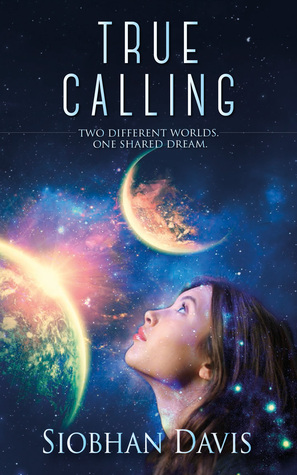
SciFi Month: Author Interview - Siobhan Davis of "True Calling"

Sci-Fi November - Hosted by Rinn Reads & Oh, the Books!

Hello everyone! Guess what, we have another author interview today! It's Siobhan Davis.

Find her on goodreads!
Find her here on twitter!
Find her official website!


This was your first book! Was there something that really surprised you about the writing process?


Yes! That writing the actual book was the easy part! I wrote the first draft of True Calling in six weeks and the story just flowed from the minute I started putting words to paper. However, I could never have anticipated how challenging and frustrating the editing process was, nor how long it would take to complete. At one stage I was quite prepared to throw my laptop out the window and forget all about publishing my book. But I persevered, and eventually plucked up the courage to publish it, and here we are


What did you do when you got stuck, or need some inspiration?


The story had been rebounding in my brain for so long that I didn’t struggle with the plot, once I actually got down to writing it. In fact, it was almost a relief to pluck the words out of my head! I mapped out the story, chapter by chapter, and was largely true to my plan, except where the story organically developed as I delved into it. The challenging part for me was consistency and development of my characterization, effective world building, and ensuring that the writing flowed smoothly. Other books were my source at inspiration at times where I felt the writing didn’t feel right, or could be improved. I’m also part of an amazing writing group, IWI, established by award-winning author Carmel Harrington, and some of the girls in the group have been tremendously supportive and helpful at periods when the going has been tough.


The story is set on another planet (earth isn't really a nice place to live anymore). What was the most fun aspect about writing a story set in outer space? What was the most challenging?


It was fun being able to let my imagination run wild and to create a world of the future. A future where advanced technology and medicine is central to the continuation of mankind, but also to explore how the fabric of society adapts and changes, as a consequence. The setting is in the not-too-distant future, and it was important to me that Novo still felt relatable and believable. Because I wanted readers to resonate with the story and the world, and to imagine themselves living there and dealing with the things that Ariana has to face. Some of the book reviewers have commented on this aspect of the world-building, so I hope I’ve successfully achieved that.
The challenging part –in trying to create a future world that is also relatable– is in ensuring that the advancements are appropriate for the timeframe, so maintaining a balance was key.
Because True Calling takes place between two worlds, Earth and Planet Novo, the experiences of the characters in each place are vastly different. I had to contrast and compare the utopian type environment on Novo with the dystopian existence on Earth. That was challenging but interesting to imagine, and write.


Do you have a favorite way to interact with fans and readers?


I don’t mind how fans and readers reach out to me and all the feedback I’ve received so far has been great. I’ve had some wonderful emails and I always get such a buzz when someone loves True Calling, and takes the time to comment or write about it.


You say on your website that you are "teen forever". How do you feel about the recent arguments lately against adults reading YA? (Like this rage inducing article from slate.)


Okay, so, I am going to go on a bit of a rant here – apologies upfront! 80% of my time I am a responsible wife, mother, employee and quite strait-laced! I relish the other 20% where I give in to my inner-teenager and indulge my passion for teenage books, music and movies. For me, it is pure escapism and a way to chill-out. I think life is about diversity, in our choices and our interests, and we should never be afraid to show who we truly are.

Harry Potter and The Twilight saga were the stories that hooked me on the YA genre, though at first I remember feeling embarrassed that I was reading them, until I realized that I was not alone. I read the same survey quoted in the Slate article, where the analysis identified that 55% of people who purchase YA books are adults, and I wasn’t in the least bit surprised.

Now, I don’t just read YA books, I am also an avid reader of crime fiction. Tess Gerritsen is one of my all-time favorite writers, alongside Patricia Cornwell, Kathy Reichs and Michael Connelly, to name a few. I also read other adult genre’s; I’ve read a lot of the classics, plenty of corporate non-fiction books and I do not discriminate in my choices.  If I like the sound of a book, or I have received a recommendation, then, I’ll read it.

However, there are certain times when all I want to read is YA. Because I love-love-love the action/adventure, kick-ass heroines, swoon-worthy romance, and the pure fantasy of the worlds created by some of my favorite YA authors. I don’t tend to read as much contemporary YA stuff, though I adore John Green’s TFIOS, and I disagree completely with Ruth Graham’s observations of this book in the Slate article. I found the dialogue between Hazel and Gus to be very compelling, emotive and refreshing, and yes, it was a little cheesy at times, but I still loved it. Moreover, how is that ending a typical satisfactory ending? Or Allegiant’s ending, when that had the Divergent fan base split right down the middle?

So if it’s seemingly wrong, as an adult, to read books ‘written for teenagers’ then does that logic apply to movies as well? Some of the greatest, and most successful, movies of all times have been children’s and teen movies. Back to the Future, Rebel without a Cause, ET, Harry Potter, etc., etc. Does going to see the latest Avengers Assemble movie with my children (one is a teenager) set a bad example? In the same way it’s suggested that my reading of Laini Taylor’s ‘Daughter of Smoke and Bone’ Trilogy or Jennifer L. Armentrout’s ‘Covenent Series’ would imply? To suggest, as Ruth Graham does in her article, that reading YA fiction sends out the wrong message to our teenage children, is ridiculous in my view. Surely the point is this: If children see their parents reading, they are more inclined to read themselves, irrespective of what genre the content is. Anything that encourages the youth of today to read more is a positive in my book (pardon the pun). Sharing some of the same reading material opens up opportunities for parents to engage in meaningful discussions with their children about these books, and to explore the issues/themes.

Rant almost over.

Some commentators have said that the writing quality in YA literature is questionable in the extreme. I disagree. While I do not pick up a YA book expecting it to be a literary work of art, I am often pleasantly surprised at the exceptional talent of so many who write in this genre. Many of these books surpass the quality of a lot of so called ‘adult literature’ that is out there in the market.

In my opinion, readers should be allowed to make their own decisions regarding books they choose to read, without risk of vilification. Because the pleasure of reading is what it is all about, and that is purely subjective. If we start expecting people to restrict their reading material, based on a narrow societal categorization of what’s deemed appropriate, then ultimately fewer people will read, and that is not okay with me.

(Wesley note:Phew! :) Preach it sister!) 


What's next for you?

My priority is completion of the True Calling series and then I’ll focus on my other WIP’s. I have another YA sci-fi in the works, and I’d love to write historical fiction at some point in the near future.


Thanks Siobhan!

22736584

Wednesday, November 5, 2014

SciFi Month - Author interview with Yoon Ha Lee

Displaying


Everybody! It's time for an author interview! The author you will be learning about today is Yoon Ha Lee. Just reading her bio will make you smarter. She went to Cornell and Stanford. She's written over 40 short stories, but she also writes poetry and her website has interactive fiction games created by her! This is one multi-talented lady, as you will see from her answers!


Want to find her on twitter? Here!
Want to get the complete lowdown on Goodreads? Here!

Please ignore all the weird formatting. I'm having issues.

You write in several different formats including poetry and short stories. Is one format harder than the rest?


I'd say that they're hard in different ways.  In poetry, formatting matters in a way that it typically doesn't in short stories (or at least, not the kinds of short stories I write).  You have to pay attention to things like line breaks.  And every word counts for more simply because there are fewer words to work with.  It's not unlike writing very short flash fiction in that regard.  If you're writing an 8,000-word story, you have some leeway with your first 1,000 words.  If your story is 2,000 words, you'd better get moving much faster than that!  So part of it is mathematical.

For me, writing poetry feels harder for the unrelated reason that I do it far more seldom.  Every so often a poem idea hits me and I commit one.  I've devoted far more time to short stories, so it's probably a matter of practice.  I've done it more and I have more of a method developed that works for me.


When you start writing do you know where you're going with the story(ending, character development) or do you just go where the story takes you?

In general, I need to know the ending, the midpoint, and the beginning.  Preferably in that order, but I'm usually not so lucky.  The ending is what I want to leave the reader with--whether that's an image or a "moral" or a plot twist.  Everything has to build toward that ending, so the sooner I know what the ending is, the more I can tailor the rest of the story toward it.

For the midpoint, I want to know what happens to recontextualize the story so that the reader can be prepared for the climax/resolution.  And then I worry about the beginning, something to catch the reader's attention.  I sweat blood over this stuff--I want to know these three things at minimum before I even start writing.  Usually, for a short story, I will also write a mini-outline in the form of a list of events/plot points that I want to hit.  This sometimes changes in the process of writing but I need the guideline to keep me from writing myself into corners.


I used to write stories by just coming up with a cool-sounding opening and following it, but this was generally disastrous.  I still have a bunch of story openings from high school and college that wound up going precisely nowhere because I was just wandering around in circles.  This is a waste of my time and I prefer not to do it anymore.


Characters are often very difficult for me.  I can come up with a plot but then I need to find characters for that plot to naturally happen to, and sometimes that takes a while.


How does your extensive math background help your writing?


Well, I wouldn't call it extensive!  A B.A. only gets you so far; sometimes I regret not pursuing a doctorate, but it wouldn't have worked out.

The first big thing, which I glimpsed in high school, is the sheer beauty of mathematical imagery.  I used to read books like Ivars Peterson's The Mathematical Tourist and James Gleick's Chaos back then, and I was fascinated by the pictures of fractals and the descriptions of nonlinear systems and so on.  Math is the language the universe is written in, and its poetry breaks my heart.  I know a lot of people have had bad relationships with math in the USA, but I want to enable other people to glimpse what I've glimpsed.  Because I know it's only a glimpse; there's so much that I never got to see because I stopped studying math so early.


(Wesley's note: I'm so stupid at math and it has been the cause of many angry feelings and tears but the way Yoon describes it makes it sound so lovely to me).


The second is that being a math major informed how I structure stories.  I want to emphasize that this isn't the only way to do it!  But one of the things that people get confused about with pure mathematics is thinking that it's about solving equations and doing computations, and math is so much more than that.  It's about patterns and structures and making arguments based on premises in a very rigorous fashion.  When I write a story, I think of it as an argument that I'm trying to make, and I want to structure the plot like a proof.  Science fiction and fantasy are especially interesting for this because you can control so much of the initial setup, the axioms.


What special challenges does writing sci fi present?


One of the difficult things is the necessity of explaining the world and context in which the characters move.  For other genres of fiction, you can say, "This is set in Las Vegas in 2000" and people automatically have some idea of what that means and what a character's behavior means in the context of that setting.  With sf that's not necessarily true. Granted, true originality is difficult--I don't aspire to it myself!--and there's a lot of premade genre furniture you can use. Aliens that want to enslave and eat humans, FTL spaceships, clones, whatever.  (I spend a lot of time on TV Tropes reading about this stuff.)  But there's the possibility of losing the reader in a setting so unfamiliar that they can't figure out what's what.  Handing off information to the reader is interesting: you don't want to do the old "As you know, Bob" lecture, and you don't want to kick them out of the story with paragraphs of bad exposition, but that information has to be conveyed somehow.  It's something I'm still working on.


Where do you go when you need to find inspiration for your writing?

I like computer games and roleplaying game campaign sourcebooks for general ideas.  Also poetry; I keep Bryher's Arrow Music, Sonya Taaffe's Singing Innocence and Experience, and Amal El-Mohtar's The Honey Month next to my desk for when I get stuck and I need to read something beautiful to encourage me to go on.


If I get truly stuck, I take some time off and wander around looking at random things, especially nonfiction.  I never know when some chance throwaway detail will strike a chord in me.  Catalogues and magazines are good because they don't require a huge commitment in terms of reading and you can find brief articles on whatever topic.  Zingerman's Mail Order catalogue is great for learning appetizing ways to describe food!  In general, it's a lot like how I dealt with recalcitrant problem sets back when I was in college.  If I got so stuck I couldn't even see the problem in my head anymore, I'd take a break and play a computer game or go for a walk or do something totally unrelated, and more often than not this break would get my backbrain working.


For plotting, I like to think of stories that really inspired me, in whatever format, and try to extract what I liked about them and figure out how I could do my own take on them.  For example, "Combustion Hour" is about shadow puppets dealing with the end of the world.  That came to me after reading John Tynes' tabletop roleplaying game Puppetland, in which the players play puppets fighting against a tyranny.  Tynes' version does not involve cosmology and stellar evolution as far as I remember, though!


Inspiration can come from anywhere, including a mail order catalogue, love it! Thanks for taking the time Yoon!


17131859

Monday, August 11, 2014

Author Interview with Catherine Aerie, author of "The Dance of the Spirits" (HF Virtual Book Tour) and giveaway!

 photo 2e0fd9be-4567-4f9e-ad85-04c8b4d9a535.png


Today I've got an author interview for you with Catherine Aerie who wrote a book called "The Dance of the Spirits".  Immediately below is all of the info about her book, and then below that is our Q&A. She gave very thoughtful and thorough answers and I hope you enjoy it!

Amazon blurb: Award Winning Novel "...fleeting but intense...An often engaging tale of a flickering moment of love during a forgotten war." --Kirkus Reviews Spring 1951: it is the fiery zenith of the Korean War, a war that the youthful US Army lieutenant Wesley Palm and his men thought that they had won… until the Chinese swept across the Yalu River. Traveling with the million-man army bent on driving back the march of “American imperialism” is Jasmine Young, a Chinese surgeon who has volunteered herself into the war for unspoken, grave reasons. Through a chronicle of merciless battles, freezing winters, and the brutality and hypocrisy of human nature, the two will find themselves weaving through the twists and turns of fate and destiny. Though their love is forbidden, their passion and pursuit of liberty cannot be quenched.


Praise for The Dance of the Spirits

“…On the surface, The Dance of the Spirits is a story of love and of war, but on a deeper level, it is a story of the misery that the communist ideology brought to millions of souls in the twentieth century. Whether that philosophy is related to nationalism, internationalism or faith, Catherine Aerie reminds readers that when a system that will entertain no contradiction in thought or deed comes to power, no one is safe — and no one is free. Aerie draws a vivid picture of war and its price, and a tender image of love…” – Readers’ Favorite (5 Stars)

“…a love that is stronger than all the horrors that war can throw at them… compelling…poignant… sensitive and beautiful…” – San Francisco Book Reviews (4.5/ Stars)

“Adversaries in the Korean War find love in Aerie’s debut novel. The story starts in the middle of a firefight… Out of the rubble, two characters emerge: an American officer… and a Chinese military doctor… Their paths cross again and again… In the intimacy of the war, these coincidences don’t feel forced, nor even particularly fated–it’s just the way things went… Readers will likely find Palm a decent, very human person, but Young has more complexity and vibrancy… As the war rages around them, Palm and Young fall in love… but their romance is ill-starred and open to tragedy. Aerie keeps readers on their toes with the twists…fleeting but intense…
An often engaging tale of a flickering moment of love during a forgotten war.” – Kirkus Reviews


Did I mention there's a giveaway? Enter here!


Why do you think the Korean War gets so little attention in the public, whereas there's so much attention given to less recent conflicts?
I believe that it had something to do with the Vietnam War growing up long and tall, swallowing the much shorter Korean War before it into its shadow. The latter could have wound up being what we as Americans now perceive the former to be had it only lasted longer; an exhausting conflict marked by a once clear goal marred by confusing politics, a continuously denied total victory, frustration from being unable to achieve it in the first place, and the simple fact that so many lives and resources were spent in a war of attrition that yielded nothing less than a bitter stalemate (or in the case of Vietnam, an anti-climatic loss) after years of fighting. That being said, the fallout from the U.S’ tiresome decade long venture in Indochina simply outgrew and overshadowed that of Korea, and the resulting aftershock upon popular culture and media perception basically reflected that matter into the public. To quote Max Hastings’ history of The Korean War: “Rather than acknowledging that too little attention has been lavished upon the victims of Korea, it may be more just to suggest that too much has been heaped upon the veterans of Vietnam. (pg. 331)”   

You came up with the idea for this book while researching your family history. Did you find any other material for follow up books during your research?
Yes: along the way while researching for the novel, I came upon the subject of the lives of token Western communities residing in China in the times before the communist takeover.

How did you pick the name Wesley? (I'm always curious when such a rare -and awesome!- name pops up places!)
The name “Wesley” has a special meaning when pronounced into Mandarin Chinese: wei - a guardian, si - a poem, and li - wisdom. I thought it’d fit his character to give him a meaningful name.         

(Wesley note: Well well well. I like that!) 


You have a degree in finance. Is it hard to balance your creative/writing part of your brain with the finance/analytical part of your brain?
It’s actually not difficult at all once you find a way to make the most of the two at the same time; I suppose that the abilities associated with the latter must have done something beneficial while I was organizing the plot structure and progression of the former. It’s nothing of a unique ability and I’m very well sure that everyone can do so too.    

What surprised you most when you were writing this book?
I was genuinely moved by the whole United Nations’ effort to enforce the voluntary repatriation program regarding the (especially communist) prisoners of war during the Korean War; by itself, this was a major and bold change especially when compared to the Allied powers handling of surrendering Axis prisoners at the close of World War II, where thousands of Axis prisoners who originally surrendered to the Western Allies were then deported back to the Soviet Union on the reasoning that they had fought against the latter for the duration of their careers. The personal wills of many of these prisoners to avoid a miserable fate in the gulags were thus ignored in the process, and the last of them were only freed up to the late 1950’s, leaving few survivors to share their stories by then.

In sharp contrast to these events only a single decade later, the West allowed its communist prisoners to choose whether to return home, where they would likely be punished for surrendering in the first place, or immigrate to another foreign country instead; in the end, the vast majority opted for the latter option.  


    02_The Dance of the Spirits

Friday, June 27, 2014

Author Interview with D. Lawrence Young - "Six Million Accusers: Catching Adolf Eichmann"


Today I'm a part of a GMTA tour talking about D. Lawrence Young's exciting sounding book!

Here's the synopsis!
"Six Million Accusers" is a historical novel reliving the hunt for, and capture of one of history's most evil criminals - a leading Nazi named Adolf Eichmann.


Having disappeared after WWII, members of an Israeli organization search the world for Eichmann, hoping to one day capture one of the men responsible for brutally massacring millions of Jews, and others. Following any tip possible, eventually they discover a Jewish father and daughter who swear Eichmann quietly lives in their community, under a new name. The search for Eichmann ramps up, and the agents begin to fervently believe they have found their man.

As they get closer and closer, a plan must also be created to capture Eichmann, and secretly transport the villain back to Israel. Is it really Eichmann? And if so, what complications may arise that might destroy their plans to have this notorious Nazi held responsible for his crimes?

"Six Million Accusers" is based on historic detail, and David Lawrence- Young does an excellent job reliving the hunt for, and capture of Adolf Eichmann. Well written and easy to read, "Six Million Accusers" should be a staple of the educational discussion of WWII and the aftermath.

~~D. Bettenson

I did a little interview with David as he is promoting his new book.


1. I see you call your book a "documentary novel". What does this mean exactly? 
 It means that this novel isn't just, to quote my friend, William Shakespeare's 'Macbeth', a product of my 'heat oppressed brain', but that it is very close to the truth and is based on reliable sources. 

2. What made you focus on Eichmann's story and not another Nazi?
I chose to write about Eichmann and his capture by the Israeli Mossad secret service since I am Israeli and also because this story is inherently a good and exciting story whoever carried out this project.

3. How much/what kind of research did you have to do to tell the story? Did it involve any travel?
Much of my research was done by using books, newspaper articles and the net. I also met an ex-Mossad agent who gave me a certain amount of information and also access to some relevant photos and correspondence in connection with capturing Eichmann and flying him back to Israel. 

4. Was there anything that really surprised you when you were researching?
Not really. I was quite knowledgeable about the details of this capturing Eichmann project. However, learning about the initial details how Eichmann's son accidentally gave away the secret of his father's hideaway was new to me. Also the story of how the original recipients of this secret was also new to me. 

5. Are there any other books coming from you in the future? Are there any other topics you'd like to explore?
I am now half-way through writing another historical novel - a much more imaginative one this time, but one that is still based on a true story about the English Civil War during 1642-51.  After this I plan to write one about the Serbian Black Hand Gang who killed the Austrian Emperor Franz Josef in Sarajevo in June 1914 and thus fired the spark that (may) have started WW1. It will be written from the Serbian point-of-view. To this end, I will be travelling to ex-Yugoslavia and Sarajevo this summer.

I'm really interested in the upcoming book about Serbia. I love a good book about historical events that don't get a lot of attention. Thanks so much for the time David, I appreciate it!


Tuesday, February 18, 2014

Q&A with Author/Tv Critic/Pulitzer Prize Winner/General Funny Man - Howard Rosenberg Plus a Giveaway!!!

I volunteered to do an author Q&A for our friend Ashley over at Closed the Cover. Howard Rosenberg is the author in question and as you can tell from his responses to my questions, he's a funny guy. Also be sure to look for more author info, details about his book "Up Yours!" and a GIVEAWAY at the end of the interview.

-----------------------------------------

1. Your current novel “Up Yours!” is not your first book, but it is your first work of fiction. What differences are there in your writing process when you are fiction or nonfiction?

Apples and oranges. In journalism—tighter, tighter, tighter! In writing fiction, I approach each scene with a much more descriptive eye, then lower it back to earth if it’s overwritten. No one commands me to “Cut 6 inches, Rosenberg.” And writing fiction is, well, so lovely because one mostly doesn’t have to worry about facts. If they don’t work or don’t exist—Voila!—change the little suckers or make them up. Of course, historical fiction is an exception (c’mon, I was a history major). And even a mystery as lighthearted as “Up Yours!” requires a certain level of factual plausibility to be credible.
More fundamentally, a non-fiction piece is factual by definition: straight reporting, interpretation based on a set of facts or clearly labeled opinion relating to facts. As a columnist, however, there were instances when I deployed fanciful writing as satire, at times making up entire dialogues for the purpose of ridicule. My intent was clear, however. At least I hope it was.

2. You were a TV critic at the Los Angeles Times for several years. Since you’ve got experience as a writer and a TV critic, are there any shows on TV right now that you think are particularly well written? 

It all begins with writing, which is almost always the soul of performance art. Even the most talented cast can’t rise above bad or even pedestrian writing. Stage or screen, makes no difference. It’s subjective, of course, but in my view the best-written comedy on TV is ABC’s “Modern Family.” The writing is sohhhhhh fluid and flat-out funny. Yet it wouldn’t work without that stratospheric cast; it’s collaboration. Also in comedy, NBC’s lightly watched but exquisitely twisted “Community” is sometimes brilliant. Love it. And HBO’s “Veep” is superb, politics-skewering satire—very, very smart and a stake right through the heart of hypocrisy. Nor does it hurt that its star, Julia Louis-Dreyfus, is arguably the best comedic actress on the planet. In drama, meanwhile, I’m enthralled by HBO’s new crime series “True Detective,” dark, brooding, deeply mysterious and densely written. And oh yes, at times ugly. Nothing easy or simplistic here, but well worth the discomfort. Yet I’m also addicted to the escapist and grandly flawed “Downton Abbey” on PBS—despite its clumsy script conveniences and gaping plot holes. So go figure.


3. You won a Pulitzer Prize for Criticism. Can you tell us more about that experience?

First, some perspective. I was TV critic for the Los Angeles Times for 25 years. That means I did not receive a Pulitzer 24 of 25 years. So no big head.
I learned of my Pulitzer when phoned by an editor as I interviewed a very classy actress named Jane Alexander in a Hollywood restaurant. I returned to the table and continued the interview, pulse racing, yet saying nothing about the reason for the call. I mean, how could I bring up something like that without sounding like an egoist jerk?
The 10 columns that earned me the Pulitzer included one that ripped ABC News for its hanging-judge-and-jury coverage of L.A. pre-school teachers accused of abusing their little charges in every grotesque way imaginable. Although most of the media piled on, they turned out to be innocent. But my favorite was a piece contrasting TV depictions of death with the death of my father as I experienced it in Kansas City, Mo. It moved me as I wrote it, and still moves me in memory.
 Winning the Pulitzer (in 1985) yielded relatively modest benefits. My teenage daughter still disliked me intensely for reasons that I never understood. And L.A. gridlock did not part for me, sadly, as the Red Sea did for Moses.
The award did earn me a prestigious New York agent (we’ve long since divorced), increased national stature, more financial opportunities, lots of unfriendly scrutiny (this slug won a Pulitzer?) and a probable first line for my obit (Pulitzer Prize-winning Howard Rosenberg kicked the bucket…).

4. You’re an adjunct professor at USC’s school of Cinematic Arts. Has that influenced your writing?

Not at all, unless I’m worse through osmosis. All right, that’s harsh. But reading student papers has taught me that something is terribly amiss in our schools when it comes to imparting basic writing skills. You know, the simple stuff like grammar and “i before e…” Most of my students (I also teach in the journalism school) are very bright, and a few are very, very good writers. Yet each semester I also get a few who have not learned that periods are probably most effective when inserted at the ends of sentences. These are students—often seniors—who can’t craft a cogent line, could not write a laundry list that you and I could understand. How did they get this far? It’s just boggling.

5. The main character in “Up Yours!” suddenly finds himself being a sleuth. Did you have to do any research for that aspect of the book?

No sleuthing research required beyond re-watching every “Thin Man” movie with William Powell and Myrna Loy—which was a joy—and continuing my self-indulgent habit of reading mysteries galore. Quite simply, I tried to envision my wife, Carol, and me facing the sleuthing challenges I gave married amateurs Ted and Liv Milo. But I cheated. I made Ted and Liv smarter. Also braver.

6. What other writing goals do you have?

Mystery fiction continues to head my list. Next time around, Ted and Liv will be off to detective school with mixed—and naturally homicidal—results. I’ve nearly rewritten “The Elvis Murders,” a hound dog of a novel that required a research trip to Memphis during the worshipful annual Elvisathon there; it has to be seen to be believed. And I’m now plotting a revisionist mystery inspired by the beloved but vastly over-praised Christmas classic, “It’s a Wonderful Life,” that will earn me the enmity of Frank Capra fans everywhere. Please, no hate mail.  

----------------------------------------------------------------
So Howard cracks me up. I feel like we would get along even if the only thing we have in common is the fact that we are underwhelmed by "It's a Wonderful Life." I wonder how he feels about "The Sound of Music?" I regret not asking him about "Justified" and Elmore Leonard. Drat! Maybe I'll get to talk to him again when he puts out his next book.

Book Synopsis
Ted Milo, until recently the Charles Dickens of obit writers, is dislodged from his
carefree new life by a bizarre collision of homicides and hemorrhoids in the fancy
Los Angeles suburb of Friendly Lake. Actually…not so friendly, Ted and his wife, Liv,
soon discover.
Ted has ditched his long newspaper career to embrace the nouveau riche life he’d
always ridiculed after inheriting a fortune from a distant relative. He is floating
blissfully, contemplating the fruits of wealth, little on his fiftyish mind beyond
bladder control, when a visit to a physician turns him into a sleuth with cold-blooded
murders to solve.
 “You’re doing this why, because the Navy SEALS aren’t hiring?” chides Liv when
learning she’s now married to Sam Spade. “And your dream of playing center field
for the Dodgers—dashed?”
Every gumshoe requires a “tomato,” though, and Liv is Ted’s when bodies hit the
slab in this twisty mystery that exposes the warty underside of seemingly tranquil
suburbia.

Author Bio
Howard Rosenberg earned a Pulitzer Prize and numerous other honors during 25
years as TV critic for the Los Angeles Times. He teaches news ethics, critical writing
and a TV symposium at the University of Southern California and resides in a far-off
Los Angeles suburb with his wife, two cats and a bird, all of whom tend to ignore
him.
His favorite pastime is slam dunking and working out with the Los Angeles Lakers.
In his dreams.


And HERE is the link to the giveaway!