Wednesday, June 20, 2018

Book review: "Death in the Air: The True Story of a Serial Killer, the Great London Smog and the Strangling of a City" by Kate Winkler Dawson

I'd heard from several other book bloggers who enjoy nonfiction like I do rave about this book, so I decided to pick it up for myself. It was okay. I learned a lot but I didn't find myself rushing through whatever I was doing to get back to this book. There are two stories told in parallel, the fact that there is a terrible fog that is metaphorically strangling London and a serial killer who is literally strangling people in London. 

It was weird, but it seemed like all of the things that I liked the most about this book were little throw away sentences, not things that were part of the big overarching story. Like, a prayer starts each parliament meeting and instead of the parliament members kneeling to pray they turn and face a wall, which is because 400 years ago they were all wearing swords and that makes kneeling hard and you know, potentially dangerous.

So this fog, it was bad. It was if you were standing on your doorstep you couldn't see the sidewalk bad. It was so bad they had to shut down the subway bad. It was so bad that over the course of 5 days it killed 12,000 people. (Mostly the very old, the very young, or people with pre-existing respiratory conditions. Like, say, men who had encounters in the first world war with mustard gas.)

I found the serial killer bit less compelling. He was creepy and bad and killed a woman and her baby and his wife and several others.

I almost think that these would have been better as two separate books. Or maybe as the same book but the stories given less equal footing like they were here.



34219897


Friday, May 25, 2018

Book review: "The Shadow of the Sun" by Ryszard Kapuscinski


This book was unending in how interesting it was and how incredibly readable and approachable it is. If you were like me and thought "I should know more about African history, I wonder what I can read that won't be 600 pages and overly specific to a time period/place/topic" I can't recommend this book fast enough. I can't recommend this book fast enough, period. The author is obviously a journalist, his writing is simple and high impact and I loved it. (He talks about crossings were sometimes just a burned out shack and a bullet riddled sign and said - "The kinds of borders for which blood is spilled were still to come into being". He would get much scarier crossings later in this time there).

So the author of this book is a Polish journalist who is sent by his Polish newspaper to chase stories all over Africa in 1957. This is a huge deal because no Polish newspaper has ever done this before and he really wanted to succeed.

An interesting thing about timing, in the late 50s that's when a lot of the white colonial powers - mainly Britain- were finally exiting the continent and a lot of folks were very bitter that their departure had taken so long. This rang true with our Polish author who tried to tell people that "You were colonized? We, Poles, were also! For 130 years we were the colony of three foreign powers, all of them white!" But no one he spoke to believed him.

He focuses on his interaction with people mostly, but I learned some about animals too. Especially what happens to male lions after the age of about 20 - they get a little slower, drop out of their packs and eventually starts to hunt and eat humans since we are (surprise surprise) easier to catch then gazelles. They are desperate, which makes them even more terrifying than normal lions.

He talks about witnessing violent coups and government takeovers and marvels at how life resumes to normal in a short-ish period of time. People have grown used to it. (In regards to a coup in Nigeria in 1966- "in a country with a surface area 3 times that of Poland, inhabited by 56 million people, the coup was executed by an army numbering barely 8,000 soldiers").  He talks about the places in Africa where the slave traders landed and took off with their human cargo and how those places still felt like cursed, haunted places all of those years later. He talks about Idi Amin in one chapter, who just holds a weird fascination for me. He was ruthless and terrifying and his secret police rained terror down on people....annnnnnnd he also like to coordinate his outfits to the car he was driving that day. Not that that should surprise me, dictators are VAIN AS HELL.

Towards the end of his time in Africa, the 80s, a new scourge was making it's way across the country, not a vain dictator, not a child soldier army, not colonial powers from abroad....AIDS.


Wednesday, May 16, 2018

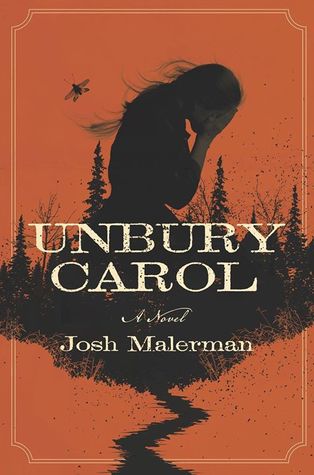
Book review: "Unbury Carol" by Josh Malerman

A few Dewey's 24 Hour Readathons ago (which the next one is coming up right quick, so go sign up) I read an awesome, terrifying, imaginative, terrifying, great, terrifying book called "Bird Box" by Josh Malerman. And then my mom read it. And I think something in us both still shrieks a little bit when we think about it. It's great. Anyway, so the author recently released the book we are going to talk about today so I took a chance that I might be so scared I cry a little while reading a picked up this book. It's not as good as Bird Box but it was creepy and made me HELLA NERVOUS a lot of the time. So, not bad!


You never specifically are told this in the book, but with all of the talk of The Trail and people riding horses and their being saloons, this book has a very Wild West feel. Carol is a vivacious,. kind woman who plays hostess in their small town often, with her husband Dwight at her side. But there is more to Carol then meets the eye, she has this strange illness like the worst type of narcolepsy ever. She suddenly falls into a coma like state where she can here everything happening around her but she can't move. After the death of a close friend, only two people in the world know about her condition - Dwight and James Moxie, the first man she ever loved but who was too scared of her condition to stay so he ran off and became an outlaw on The Trail. This becomes a problem when Dwight, sick of being in his wife's shadow and wanting all of her money to himself decides to bury her alive during one of her spells. It's. Always. The. Husband. When James finds out and hurries to be save her, Dwight hires a hitman to take out James.

So, the hitman is the best/ scariest part of this book. His name is Smoke because he loves to burn people and things. There are more people who are killed in fires in this book then I think any other book I've ever read. It's kind of a lot. I'm getting the heebeejeebies just thinking about him, if I'm honest.

What I liked about this book was the magical realism element. Carol's illness, the fact that Smoke is like the literal devil, and the fact that James is rumored to kill people without actually drawing his gun. The downside of the book for me is that the ending, which is supposed to be huge and climactic felt like a little bit of a let down. And the big twist is kind of a deus ex machina.

This book would translate well into a movie. (Why do I feel like when I say that it's a bad thing? It's not!)

A good, solid 3.2 out of 5 stars for this book.


35274560

Tuesday, May 8, 2018

4 things I learned about monsters from "Medusa's Face and Vampire's Bite: The Science of Monsters" by Matt Kaplan

1. Maybe the reason that some people believed in the cyclops is elephant skulls. When an elephant dies and their skin rots away the skull has a big hole where the trunk is connected, but without the flesh of the trunk it looks like a perfect whole for a big old eyeball.

2. The amount of native tribesman in the Philippine's who have terrifying, often deadly encounters with pythons is nightmare high.

3. So you might be familiar with the succubus, which is a female demon who bends men to her will through sex, which also slowly takes their souls. The male version of a succubus is an incubus. Incubus in Latin means "to lie on top" and succubus in Latin means "to lie under". Take that however you will.

4. Garlic is a super popular tool for warding off all kinds of monsters, not just vampires. Egyptians thought it could repel ghosts. In Asia you smear it on people to prevent them from being susceptible to charms and spells cast by witches and wizards.

There was a lot of talk about rabies in this book as well which is, of course a bonus for me because I'm more than a little nuts.

This book was okay. 2.5 out of 5 stars.

13547273

Tuesday, April 10, 2018

Book review: "The Leftovers" by Tom Perrotta

This was a book club book for my work book club, and while sometimes those picks can be very hit or miss this one was a hit for me. Though, to be fair, it was already on my TBR.

The story is this: basically a worldwide phenomenon occurs and people suddenly disappear. It's kind of like the concept of The Rapture but there seems to be no rhyme or reason to who is taken. (Part of me was desperate to know who and why but we never find out, but I think that it is better that way.) It follows the people who are left behind and how they deal with being...left behind.

I like that people deal with the practical questions (If my husband disappears are we still considered married? Do I need to divorce him? What about life insurance money? His 401k? Is there going to be more people taken? Are those people dead?) and just the sense of the community reeling. 
I feel like the United States kind of got a sense for this in a small way after September 11th. The people being vulnerable and scared and not knowing what happens next and crying in the soup aisle at the grocery store and it not being weird.

So the book follows a group of people who have either had family members disappear (one woman had her husband and her 2 kids disappear, her whole family) or people who didn't have family members disappear but are still grappling with this ridiculously huge life change. 

Weird cults spring up (super interesting plot line for me) as people try to deal with what their lives look like now and it does not always go well, in fact it can also end in violence and sometimes does.

I thought that this was an interesting read and I hope it generates some interesting conversations at book club whenever we get around to talking about it!

10762469

Saturday, March 31, 2018

This "book" was weird, but thanks for all of the fun Blogging for Books!

If you aren't aware, there is a website called "Blogging for Books" which book bloggers could sign up and get a free book, that they would then review on their website and put the review on the BfB site and then they would get a new one. I used it a lot, and found some really interesting books there. Sadly, they are closing, and even more sadly the last book I had to review from them was a total dud. 

(It was probably partially my fault because I was trying to get out of the box a little and it ended up being a step too far).

The book was : "Fliers: 20 Small Posters with Big Thoughts". The big thoughts were more like things that your friends who are inebriated say when they are trying to sound philosophical.

Like there is one, and the picture is a bonfire and the words say: "Burn your house down. Start over tomorrow while there's still time. This is what I'm talking about". Um. Ok.

Maybe I'm just too old are not funny but I flipped through this book, set it down went "well that was dumb" and didn't give it another thought until I finally sat down to write this review literally months later.

So, a less than ideal end to a fun partnership with Blogging for Books, but it was the outlier more than the norm!

Friday, March 9, 2018

Book review: "Bloodlands: Europe Between Hitler and Stalin" by Timothy Snyder. And the value of reading books that make you feel sick.

Oh everyone. The book I'm going to talk to you about today is of the sad and gory and heavy sigh inducing variety. And then after the book review I want to talk about why we should read books that make us just, sick to our stomachs at the thought of the actions wherein.

The book today is Bloodlands: Europe between Hitler and Stalin and it's by a man named Timothy Snyder. Timothy also wrote a book called Black Earth  which is a book devoted to exploration of the Holocaust. This book is also set around World War II but focuses more solely on the countries that were often caught in between the crossfire of Stalin and Hitler as they raged for land and supremacy during the second world war (the countries that feature the most prominently - besides Germany and the Russia/Soviet Union - are Poland, present day Belarus, present day Ukraine, present day Latvia.). This book has a wide array of great maps which helps immensely. 

I honestly don't know if I can do this book justice, or even review it in a logical and sensible way, so I'm just going to go through my notes and try to really emphasize the things that stood out to me/got me thinking the most/made me the most upset. (Honestly almost all of these quotes come from the conclusion, he just summarizes and ties everything together so succinctly. If you are interested in this book but don't think you can handle the 350+ pages of this kind of thing, just read the conclusion.

To understand the terror of the bloodlands you have to try to wrap your mind around the scale of the killing: "Between them, the Nazi and Stalinist regimes murdered more than fourteen million people in the bloodlands. The killing began with a political famine that Stalin directed at Soviet Ukraine, which claimed more than three million lives. It continued with Stalin's Great Terror of 1937 and 1938, in which some seven hundred thousand people were shot, most of them peasants or members of national minorities. The Soviets and the Germans then cooperated in the the destruction of Poland and it's educated classes, killing some two hundred thousand people between 1939 and 1941....Germans starved the Soviet prisoners of war and the inhabitants of besieged Leningrad taking the lives of more than 4 million people...the Germans and the Soviets provoked one another to to even greater cries, as in the partisan wars for Belarus and Warsaw where the Germans killed about half a million citizens".

"Victims left behind mourners. Killers left behind numbers".

Just to build off that paragraph there - 
-Poland was dismantled and mangled in an incredibly methodical way, by the Germans and Soviets working together and separate. It was incredible to just watch pieces of the country be carted off and there was nothing the Polish could really do to stop it.
-This book gave me the most information I've found about the Warsaw uprising. I never really knew a lot of the details about it, just the large strokes of it in general, but it was chilling and was one of the things that shook me to my core the most. 

So when you think of Auschwitz you probably think of this terrifying place where most of the Jews killed in the Holocaust were killed. That's actually not true (the terrifying part is true). "Auschwitz was also not the main place where the two largest Jewish communities in Europe, Polish and the Soviet were exterminated. Most Soviet and Polish Jews under German occupation had already been murdered by the time Auschwitz became the major death factory. By the time the gas chamber and crematoria complexes at Birkeneau came on line in spring 1943, more than three quarters of the Jews who would be killed in the holocaust were already dead.....Auschwitz is the coda to the death head fugue." 

This chunk of text maybe was the most surprising thing to me that I read in the whole book, sorry it's long but it's important to hear all of it for the right context: "The image of the German concentration camps as the worst element of National Socialism is an illusion, a dark mirage over an unknown desert...The concentration camps did kill hundereds of thousands of people at the end of the war, but they were not (in contrast to the death facilities) designed for immediate mass killing. Hews who were sent to concentration camps were among the Jews who survived...the ones who survived would have been worked to death eventually. but were liberated at war's end. The German policy to kill all the Jew of Europe was implemented not in the concentration camps but over pits, in gas vans, and at the death facilities in Chelmno, Belzec, Sobibor, Treblinka, Majdanek and Auschwitz". 


This book is full of terrible stories, people placed in terrible situations and having to make terrible choices that we can't comprehend. One way that this book is something that I felt like I could even make it through is that the author is just so skilled at writing. He has this lovely and elegant writing style even when the subject matter is hard.  


So I do a lot of my reading over my lunch half hour at work. People have gotten used to seeing me read some books about weird things. When people would see this book and ask me "so how's that book going?" I always was puzzled on how to answer. This is an incredibly well researched and written book so sometimes I would say "It's going pretty well." But that seems like a weird thing to say about a book where you are learning about, millions of people being starved to death in the Ukraine for no reason. (But then people who are just trying to be polite don't want the whole backstory on Stalin's Great Terror.) I've decided that the best answer I can give when someone asks me about a book like this or asks "why would you read a book like this, it sounds awful and depressing". My answer is: "It's important. We have to remember the heartbreaking soul crushing stories more than any any other stories". Which I know sounds pretentious and contrived but it's true. It's a thing that rolls around in my brain a lot and I'm still trying to get it together.

Anyway, this book is important/well written/well researched/anguishing/informative. First 5/5 for the year.


6572270