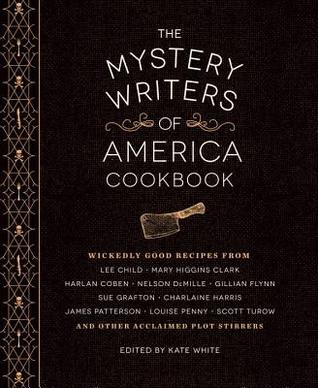
I received this book in exchange for an honest review from the delightful publisher, Quirk Books.
One of the things that I love about Quirk is the great variety of books that they put out. Mysteries, kids books, cookbooks, and all great things in between. When this book came up for review I knew it was going to be great, so when Eric Smith (Quirk tweeter, author and corgi puppy have-r) asked if I wanted to review it I knew me and my mediocre cooking skills were in!
If I was to tell you all the recipes that I put a post it note in, this would be a very long review. I will just give you a taste of my favorites:
-Rum Soaked Nutella French Toast. Every word in that name is good. Boozy breakfast food with the world's favorite hazelnut spread? Yes and yes.
-Corn Chowder. Corn chowder is my favorite soup! The problem is that a lot of time people want to put too much other stuff in it (like shrimp corn chowder? No! Get your seafood out of my soup. Be gone!) This recipe has only 3 steps and a not-scary ingredient list. By the time this review goes up I'll probably have already made it a few times. (Update - I've made this twice now and it is delicious! Goes great with really crusty bread. Yum!!)
And then two recipes that's names made me laugh:
-Grandma Maria's Pasta Puttanesca (Pasta a la Whore)
-Male Chauvinist Pigs in a Blanket
There's some recipes that are short and approachable sounding (like Male Chauvinist Pigs in a Blanket, and 3 Egg Omelette) and some that are more fancy and complicated sounding, so it covers a great range of cooking abilities. Each recipe is by a different author: sometimes the recipe is referenced in their books, sometimes they eat it while they are writing, sometimes it's just their favorite recipe! Each recipe has a little story about it (sometimes even a book excerpt) and a short biography of the author. I feel like a lot of them were Edgar winners! There's even some very famous writers like Harlan Cohen, James Patterson and Gillian Flynn. And blog favorite, Ben Winters.
The book is also beautiful and weighty and I love the side of the cover where it's skull and crossbones and a dagger and a fork. Love it! I'm off to put this on my (meager) cookbook shelf, it's certainly going to be the star!
A fun little blog about books, hopefully you will find something that inspires you!
Wednesday, April 15, 2015
Monday, April 13, 2015
Fun Link Round-Up from Flavorwire and Happy Library Week!
You know what website is really fun? Flavorwire. Here's some fun links from them:
I saw this article about author's tombstones. I think DH Lawrence's is badass.
I've never given Pride and Prejudice or Jane Austen much of an effort. But I do appreciate a good burn, talked about here.
Literary Moments on TV, I have a feeling there could be a whole list just for The Simpsons! Check it out here.
Sexy villains, who can resist this list!? (Uh Patrick Bateman is scarrrrry. I hate him and that book).
Did you know that some authors like to drink alcohol? I know, it's shocking but here's proof!
Some of the best books are ones that can't quite fit into a genre. Get some reading suggestions here.
If you are celebrating National Library Week at work, or at your favorite place to check out books, have a great one! I put on a littler version at the library at my work, hoping that people attend and enjoy!
I saw this article about author's tombstones. I think DH Lawrence's is badass.
I've never given Pride and Prejudice or Jane Austen much of an effort. But I do appreciate a good burn, talked about here.
Literary Moments on TV, I have a feeling there could be a whole list just for The Simpsons! Check it out here.
Sexy villains, who can resist this list!? (Uh Patrick Bateman is scarrrrry. I hate him and that book).
Did you know that some authors like to drink alcohol? I know, it's shocking but here's proof!
Some of the best books are ones that can't quite fit into a genre. Get some reading suggestions here.
If you are celebrating National Library Week at work, or at your favorite place to check out books, have a great one! I put on a littler version at the library at my work, hoping that people attend and enjoy!
Friday, April 10, 2015
Graphic Novel Review - "American Born Chinese" by Gene Luen Yang
It wouldn't really be fair to call this one novel, because it's really 3 separate stories that all kind of tie together at the end.
Story 1: Timmy starts as a third grader at a new school. His parents are both Chinese, and immigrated to America but he was born in the States. He struggles as kids tease him about his name and if he eats dog or not. He kind of reluctantly becomes friends with the one other asian kid in his class who is also new. We follow him as he gets older and struggles with the normal teenage things like liking girls and wanting to fit in.
Story 2: Danny is just trying to be an all american teenage but than his cousin comes to visit. His cousin Chin-Kee is every bad chinese stereotype. Buck teeth, the pyramid shaped bamboo hat, the problem with some word pronunciation ("brockoree" instead of broccoli). He wreaks havoc on Danny's tentative social life, and he starts to ruin everything for Danny, so he says.
Story 3: The Monkey King is (wait for it) king of the monkeys. He studies a lot and has learned to many things making him a powerful king. Than he gets slighted by other gods and goddesses and kings and gets maaaaad. It turns him into a power hungry jerk that "forgets where he came from".
I'm kind of ambivalent about this book. It was fine. I liked the style of the art. I wasn't really all about the 3 story and then tying it together. I'm just very "meh" about it. The best part is the art. I guess a 2.5 out of 5?
Story 1: Timmy starts as a third grader at a new school. His parents are both Chinese, and immigrated to America but he was born in the States. He struggles as kids tease him about his name and if he eats dog or not. He kind of reluctantly becomes friends with the one other asian kid in his class who is also new. We follow him as he gets older and struggles with the normal teenage things like liking girls and wanting to fit in.
Story 2: Danny is just trying to be an all american teenage but than his cousin comes to visit. His cousin Chin-Kee is every bad chinese stereotype. Buck teeth, the pyramid shaped bamboo hat, the problem with some word pronunciation ("brockoree" instead of broccoli). He wreaks havoc on Danny's tentative social life, and he starts to ruin everything for Danny, so he says.
Story 3: The Monkey King is (wait for it) king of the monkeys. He studies a lot and has learned to many things making him a powerful king. Than he gets slighted by other gods and goddesses and kings and gets maaaaad. It turns him into a power hungry jerk that "forgets where he came from".
I'm kind of ambivalent about this book. It was fine. I liked the style of the art. I wasn't really all about the 3 story and then tying it together. I'm just very "meh" about it. The best part is the art. I guess a 2.5 out of 5?

Wednesday, April 8, 2015
Book Review: "The Undertaker's Daughter" by Kate Mayfield
We are going to start with a moment of honesty. I didn't pay attention to the fact that the author and the girl in the story had the same name. When I sat down to write this I finally saw it and realized that this was an autobiographical type of story. Ohhhh.Well that explains why I liked it because it felt really real and that not everything was tied up in a neat shiny bow at the end with everyone living happily ever after.
Kate's father is an undertaker, but not like a Adams family undertaker. He's a clothes horse and quick to laugh. Kate idolizes her dad and always thinks that watching him work is fascinating. Kate's mother helps run the funeral home by managing the phones and keeping the kids from sneaking down the stairs to spy during visitations and funerals. Mom and dad don't have much of a relationship, and you find out later why. There are also siblings, older brother and sister Thomas and Evelyn, and then eventually a younger sister named Jemma. (One thing that kind of confused me about the book was the spacing of the siblings. Thomas and Evelyn seemed close in age and then it seemed like a decent sized gap, and then Kate and then an even bigger gap and than Jemma. The dynamic between the kids was not always a friendly one and I was curious if age differences made an impact). Thomas is wonderful and studios, Evelyn is volatile, cruel and moody. They reside in Jubilee, Kentucky which is exactly the kind of town you're picturing, sometimes short of anything resembling jubilation.
Our story follows Kate as she grows, especially as a teenager in the 60s and 70s. The older she gets the more she realizes that there is more going on in her family than she realized as a child. She sees evidences of her father's alcoholism, whispers about infidelity (mostly involving church ladies, which, yeesh), and symptoms of what we call PTSD from her WWII vet father. (I thought that the story of his stomach scar was one of the most compelling parts of the story and that doesn't get wrapped up until the very very end, so they made me wait for it!). Mom is also in denial about a lot of this so that doesn't help at all.
This is a stressful life for all involved. Running a family business, being on call 24/7 for a job that is already emotionally taxing, an unhappy marriage, racial tensions, the Vietnam War, and an increasingly violent Evelyn makes Kate want to get out of Jubilee
I appreciate the realness of the story (because it turns out that it's real, come on Wesley). It highlighted a lot of problems that were happening that still go on today (sadly): stigma about mental illness to a point where it goes untreated, war vets not getting the support they need, racism and bigotry. Not everyone gets a happy ending with this story and I think that's what makes it relatable. (I also want a spin off about the Shroud Lady). A high 3.5 stars out of 5!
Kate's father is an undertaker, but not like a Adams family undertaker. He's a clothes horse and quick to laugh. Kate idolizes her dad and always thinks that watching him work is fascinating. Kate's mother helps run the funeral home by managing the phones and keeping the kids from sneaking down the stairs to spy during visitations and funerals. Mom and dad don't have much of a relationship, and you find out later why. There are also siblings, older brother and sister Thomas and Evelyn, and then eventually a younger sister named Jemma. (One thing that kind of confused me about the book was the spacing of the siblings. Thomas and Evelyn seemed close in age and then it seemed like a decent sized gap, and then Kate and then an even bigger gap and than Jemma. The dynamic between the kids was not always a friendly one and I was curious if age differences made an impact). Thomas is wonderful and studios, Evelyn is volatile, cruel and moody. They reside in Jubilee, Kentucky which is exactly the kind of town you're picturing, sometimes short of anything resembling jubilation.
Our story follows Kate as she grows, especially as a teenager in the 60s and 70s. The older she gets the more she realizes that there is more going on in her family than she realized as a child. She sees evidences of her father's alcoholism, whispers about infidelity (mostly involving church ladies, which, yeesh), and symptoms of what we call PTSD from her WWII vet father. (I thought that the story of his stomach scar was one of the most compelling parts of the story and that doesn't get wrapped up until the very very end, so they made me wait for it!). Mom is also in denial about a lot of this so that doesn't help at all.
This is a stressful life for all involved. Running a family business, being on call 24/7 for a job that is already emotionally taxing, an unhappy marriage, racial tensions, the Vietnam War, and an increasingly violent Evelyn makes Kate want to get out of Jubilee
I appreciate the realness of the story (because it turns out that it's real, come on Wesley). It highlighted a lot of problems that were happening that still go on today (sadly): stigma about mental illness to a point where it goes untreated, war vets not getting the support they need, racism and bigotry. Not everyone gets a happy ending with this story and I think that's what makes it relatable. (I also want a spin off about the Shroud Lady). A high 3.5 stars out of 5!

Monday, April 6, 2015
Author Signing with Erik Larson & Review of "Dead Wake"
So, it's quite the day in Wisconsin today. Brewers opening day and the men's baskebtall team is playing in the championship game tonight. If you're thinking "Gee, I wonder how much beer is going to be drunk in Wisconsin today?", the answer is all of it. We will be completely out of beer by Tuesday. Also a lot of pretty hungover people. As for myself, I will be at work just like any other Monday, because someone has to be! And because we have to talk about Dead Wake! Hooray!
I had built up very big expectations for "Dead Wake". I loved the other works of Larson's that I had read and gobbled his most recent offering down the second my hot little hands got on my library copy. (I had to wait to get my own copy at the signing.) I knew some things about the Lusitania: great loss of life, some cargo was suspect, and that it went down near Kinsale, Ireland. (Though I confess I thought it was journeying from England to American when it sunk, not the other way around; which is what happened in reality).
War was brewing, and though there was some worry (and some cause) about boat travel most people had no trepidation about sailing on the Lusitania. She was a greyhound of the sea, and most people felt comfortable that she could outrun anything the Germans had in their navy. (Which would only work if she saw the threat coming, but that's the thing about U-boats...) And as of April 1915 she's had over 200 successful crossings.
I seriously want to tell you guys everything about this book: the interesting people who were passengers, the acts of heroism & the acts of cowardice in a time of crisis, amazing survival stories, and heartbreaking deaths. There is a passage in the book about people who died putting their life vests on the wrong way and I think it will haunt me forever.
This book is really Larson at his greatest. It's a book that, even though you know the sad ending, has your heart in your throat. I love the little side stories that don't directly deal with the ship, but somehow are connected. It's an easy 4 stars out of 5 for me. Even if you don't pick up this book, pick up an Erik Larson book, you will be happy you did.
And to close the review portion of this post, here is how I feel about submarines now (a tweet from when I was reading):
On to the author event! Mom and I went to Boswell Book Company on the March 24th to see Erik Larson. The books were pre-signed; if we wanted a personalizations we could have stayed afterward but the line would have been at least 45 minutes and Mom and Dad already had to drive an hour home, so we passed. There was at least 300 people at the signing which was a big change from the Ben Winter's signing! They were both fun and good, just very different. He was promoting his fabulous book "Dead Wake" but also answered questions on his other books too. I took some notes, so I'll bullet point those up for you!
I had built up very big expectations for "Dead Wake". I loved the other works of Larson's that I had read and gobbled his most recent offering down the second my hot little hands got on my library copy. (I had to wait to get my own copy at the signing.) I knew some things about the Lusitania: great loss of life, some cargo was suspect, and that it went down near Kinsale, Ireland. (Though I confess I thought it was journeying from England to American when it sunk, not the other way around; which is what happened in reality).
War was brewing, and though there was some worry (and some cause) about boat travel most people had no trepidation about sailing on the Lusitania. She was a greyhound of the sea, and most people felt comfortable that she could outrun anything the Germans had in their navy. (Which would only work if she saw the threat coming, but that's the thing about U-boats...) And as of April 1915 she's had over 200 successful crossings.
I seriously want to tell you guys everything about this book: the interesting people who were passengers, the acts of heroism & the acts of cowardice in a time of crisis, amazing survival stories, and heartbreaking deaths. There is a passage in the book about people who died putting their life vests on the wrong way and I think it will haunt me forever.
This book is really Larson at his greatest. It's a book that, even though you know the sad ending, has your heart in your throat. I love the little side stories that don't directly deal with the ship, but somehow are connected. It's an easy 4 stars out of 5 for me. Even if you don't pick up this book, pick up an Erik Larson book, you will be happy you did.
And to close the review portion of this post, here is how I feel about submarines now (a tweet from when I was reading):
"Reading Dead Wake is making me scared shitless of submarines. I'm going to start checking for them under my bed if this keeps up."
On to the author event! Mom and I went to Boswell Book Company on the March 24th to see Erik Larson. The books were pre-signed; if we wanted a personalizations we could have stayed afterward but the line would have been at least 45 minutes and Mom and Dad already had to drive an hour home, so we passed. There was at least 300 people at the signing which was a big change from the Ben Winter's signing! They were both fun and good, just very different. He was promoting his fabulous book "Dead Wake" but also answered questions on his other books too. I took some notes, so I'll bullet point those up for you!
- He joked that he was going to read 28 pages of the book. Then he said that "he would rather have a vasectomy without anesthetic than hear a writer read from their own writing". (He did do some reading from the book but it was not 28 pages, and it was transcripts).
- He loves archives. The researching for his books is "the fun part".
-He says that he doesn't think of himself as a historical writer but a historical animator. He wants to "find the right details that will fire the readers imagination".
-When he's between books and looking for ideas he calls it "the dark country of no ideas". (Sounds like a Bradbury book to me!)
-He doesn't have any desire to write fiction anymore. He has 4 complete novels in his office and "they will never be published because they are terrible".
-He thinks it's great that people want to talk about his books for movies but he doesn't really want to get involved in the making.
-He never adds or makes up dialogue in his books. Every quote is taken directly from a transcript or a log or some other source. (He was very emphatic on this point)
He did some Q&As, some of which are detailed above. I was totally unprepared but made up a question on the fly and he called on me! Yay! My question was something like "A lot of your material is tragic. When your book is done does it take awhile for you to pull out of it?" (Not a greatly asked question but he got my point. When he reads about something terrible one part of him is like "Oh thats so awful and tragic!" but another side of him is like "Oh great material for the book!". So he doesn't generally struggle with it. Though when he was writing "Garden of Beasts" he had to do a lot of researching of the Third Reich, which was awful. He said he had a bit of "low grade depression" that his family noticed while writing that one. (Hitler and the Nazis will do that to you!)
There is more but this is already the longest post in the history of ever, so I will leave you with some pictures. (That are all weirdly formatted for some reason)
Friday, April 3, 2015
Holy Week Book Review: "Coffee, Tea, and Holy Water: One Women's Journey to Experience Christianity Around the Globe" by Amanda Hudson
(Thanks for hanging out during Holy Week. We kick off Monday with a review of Dead Wake and talking about my experience at the Erik Larson book signing! Yay!)
*Thanks to Netgalley for the book!*
Amanda Hudson has some questions about Christianity. She identifies herself as a "born again" Christian living in the Southern part of the United States. She mostly has worshiped in the "huge church, praise band with spotlights, big production VBS" kind of churches, but knows that this type of worship and Christianity is not the same kind of worship that is experienced around the world.
She picks 5 countries and goes to experience Christianity and worship like they do: Brazil, Wales, China and Honduras.If I went into extreme detail about each place this would be the longest review ever, so I hope little tidbits will get you interested enough to pick up this book.
First up, the city of Natal in Brazil.
Here's what we learned in Brazil:
-Morning services in the area she visited don't do well in the morning. They usually have one service in the evening.
-80% of Brazil's population live on the eastern coastline of the country.
-Spiritism can be a big component of Brazilian culture and can be really scary in some cases. People seem much more open to have unexplained supernatural religious encounters than we would be here.
Next, Wales. I didn't write down the city but it's in a place nicknamed Mumbles.
I thought this was interesting: there was a survey done in Europe and it asked: Does religion occupy an important place in your life? Sweden, Denmark, Norway and Czech Republic were the top responders who said no. (between 83% and 75% of respondents). The UK was following closely at 71%. Czech republic I kind of get because they were under Communism other oppressive regiems for so long. And the other countries are more well known for not being religious. But the UK? Fewer countries have a history more shaped by religion than they. (Not always in a good way).
Wales has the lowest church attendance out of the 4 regions of Great Britain. Amanda really dug to try to find out the root cause of this decline of church attendance in a formally really religious part of the world. Her best guess was apathy (CS Lewis also predicted this happening in Great Britain, by the way)
Next, Tanzania. Where the local salary is about $2 a day and the candy bars in grocery stores by the check outs are kept under glass like expensive watches in a department store. She visits and stays with doctors who run the Tanzanian Christian Clinic. The most common maladies are stomach worms, infections and mostly preventable maladies.
The most intersting part of this section had really nothing to do with church but with 2 schools of thought regarding international aid.
First up, paternalism. This is basically saying "hey, let's build a medical clinic. It needs running water and electricity and air conditioning. It'll kind of be like we have in our developed country that we are coming from."
The other, indigenous. They say "hey, let's build a medical clinic. But we want it to be developed all internally. If the locals live in places with dirt floors and oil lamps, that's what we will make this clinic like because it's more in keeping with what is here and we don't want to bring in too many outside influences."
(This is me COMPLETELY oversimplifying, but the point is still there.)
China.
The most interesting part in this chapter for me is the difference between churches that are registered with the government and house churches.
Registered churches aren't able to openly evangelize (hand out pamphlets, go door to door) but they are allowed to worship with very little government harassment. But some of the churches have to compromise with the government and it's philosophies to keep the harmony (like some churches deny miracles or the virgin birth). Home churches meet in, uh, homes and don't register with the government. They want the ability to teach their theology without compromising it with the government. And they want the ability to spread the gospel to others (even if it's quietly and not in a grandiose fashion) There's also a scene about a Chinese wedding that is so very different than what we do here!
Finally, Honduras.
Amanda joins a medical mission that goes into rural Honduras. Here, like in Tanzania, a lot of the common complaints are things that we could solve easily with some clean water, some tylenol or a quick doctor visit. The thing that would make the most difference to them medicinally would be readily available clean water. The most interesting part of this trip were the people on the trip with her and their stories.
(Sorry Honduras, you're last and this review is long)
I wish she would have talked a little more about how she picked the countries. I think it came down to where there was connections, in the case of Honduras who needed help with their medical mission. I just am curious. Obviously her couple of experiences at a few churches in these countries are not going to be duplicated all over that country. I wish that she could have spent even longer, and experienced even more at each of the countries to get a wider sample. But hey, we are all slaves to budget and time restraints. I get it. I give this book a 3.5 out of 5 stars! Also, I'd like to go to Wales. I always thought this would be a pretty place to visit, and the descriptions seem to confirm!
*Thanks to Netgalley for the book!*
Amanda Hudson has some questions about Christianity. She identifies herself as a "born again" Christian living in the Southern part of the United States. She mostly has worshiped in the "huge church, praise band with spotlights, big production VBS" kind of churches, but knows that this type of worship and Christianity is not the same kind of worship that is experienced around the world.
She picks 5 countries and goes to experience Christianity and worship like they do: Brazil, Wales, China and Honduras.If I went into extreme detail about each place this would be the longest review ever, so I hope little tidbits will get you interested enough to pick up this book.
First up, the city of Natal in Brazil.
Here's what we learned in Brazil:
-Morning services in the area she visited don't do well in the morning. They usually have one service in the evening.
-80% of Brazil's population live on the eastern coastline of the country.
-Spiritism can be a big component of Brazilian culture and can be really scary in some cases. People seem much more open to have unexplained supernatural religious encounters than we would be here.
Next, Wales. I didn't write down the city but it's in a place nicknamed Mumbles.
I thought this was interesting: there was a survey done in Europe and it asked: Does religion occupy an important place in your life? Sweden, Denmark, Norway and Czech Republic were the top responders who said no. (between 83% and 75% of respondents). The UK was following closely at 71%. Czech republic I kind of get because they were under Communism other oppressive regiems for so long. And the other countries are more well known for not being religious. But the UK? Fewer countries have a history more shaped by religion than they. (Not always in a good way).
Wales has the lowest church attendance out of the 4 regions of Great Britain. Amanda really dug to try to find out the root cause of this decline of church attendance in a formally really religious part of the world. Her best guess was apathy (CS Lewis also predicted this happening in Great Britain, by the way)
Next, Tanzania. Where the local salary is about $2 a day and the candy bars in grocery stores by the check outs are kept under glass like expensive watches in a department store. She visits and stays with doctors who run the Tanzanian Christian Clinic. The most common maladies are stomach worms, infections and mostly preventable maladies.
The most intersting part of this section had really nothing to do with church but with 2 schools of thought regarding international aid.
First up, paternalism. This is basically saying "hey, let's build a medical clinic. It needs running water and electricity and air conditioning. It'll kind of be like we have in our developed country that we are coming from."
The other, indigenous. They say "hey, let's build a medical clinic. But we want it to be developed all internally. If the locals live in places with dirt floors and oil lamps, that's what we will make this clinic like because it's more in keeping with what is here and we don't want to bring in too many outside influences."
(This is me COMPLETELY oversimplifying, but the point is still there.)
China.
The most interesting part in this chapter for me is the difference between churches that are registered with the government and house churches.
Registered churches aren't able to openly evangelize (hand out pamphlets, go door to door) but they are allowed to worship with very little government harassment. But some of the churches have to compromise with the government and it's philosophies to keep the harmony (like some churches deny miracles or the virgin birth). Home churches meet in, uh, homes and don't register with the government. They want the ability to teach their theology without compromising it with the government. And they want the ability to spread the gospel to others (even if it's quietly and not in a grandiose fashion) There's also a scene about a Chinese wedding that is so very different than what we do here!
Finally, Honduras.
Amanda joins a medical mission that goes into rural Honduras. Here, like in Tanzania, a lot of the common complaints are things that we could solve easily with some clean water, some tylenol or a quick doctor visit. The thing that would make the most difference to them medicinally would be readily available clean water. The most interesting part of this trip were the people on the trip with her and their stories.
(Sorry Honduras, you're last and this review is long)
I wish she would have talked a little more about how she picked the countries. I think it came down to where there was connections, in the case of Honduras who needed help with their medical mission. I just am curious. Obviously her couple of experiences at a few churches in these countries are not going to be duplicated all over that country. I wish that she could have spent even longer, and experienced even more at each of the countries to get a wider sample. But hey, we are all slaves to budget and time restraints. I get it. I give this book a 3.5 out of 5 stars! Also, I'd like to go to Wales. I always thought this would be a pretty place to visit, and the descriptions seem to confirm!

Wednesday, April 1, 2015
Holy Week Book Review- "The Circle Maker: Praying Circles Around Your Biggest Dreams and Greatest Fears" by Mark Batterson
Welcome to today's Holy Week post, let's get started shall we? I have a feeling that most of this review is going to be quotes and not a lot of reviewing.
The book starts out by telling the story of Honi. He lived in the first century BC, the century before Jesus. His area was going through an incredibly long drought, one that could eventually kill everyone and everything in the area. Honi drew a circle around himself and prayed for rain, but not just any rain. He prayed for enough rain to fill cisterns and wells and rejuvenate the land. He also asked for God to rain down blessings on the people as well, that they might believe. Honi was bold in his prayers and the book proposes that everyone takes on this bold kind of prayer idea.
(Here's the part where I just start quoting the book)
"You can’t pray for open doors if you aren’t willing accept closed doors, because one leads to the other." You know the popular phrase "Sometimes when one door closes another door opens?" I think that goes for prayer too. Maybe you desperately want something and you pray circles around it and it still doesn't happen. Maybe it doesn't happen because there is something even greater that He has planned for you, and that plan doesn't go through the "door" that you originally wanted, it goes through another one.
"God can recycle our mistakes" Have you made a mistake and feel like you can't come back from it? Or that nothing good possibly could come out of it? God can make even the bad things turn out for our good.
"God can not be bribed or blackmailed. God doesn't do miracles to satisfying our selfish whims....He does miracles for one reason and one reason only: to spell his glory". So if you're praying for a Porsche 911 because you think it'd be a great way to pick up chicks, maaaaybe take a minute to reevaluate. Though if it's a way to pick up chicks and then talk to them about Jesus you might have a little more leeway. I don't know, I'm not the Boss, I don't make the rules.
There was a story about a woman (Lisa) who the author knows who works at a church and outreach center in Birmingham Alabama. As she was walking out the door to go to work she felt this incredibly strong impulse to grab a pair of her warm, woolly socks. She had no idea why, but she put them in her purse because she couldn't shake the feeling. She went to open the church and there was a woman, slumped in the doorway passed out. She brought the woman into the church and Lisa held her until she woke up. They talked for awhile and Lisa asked "If you could have anything, what would it be?" and the woman answered "Woolly socks". Lisa gave her the socks she had felt the strange impulse to grab that morning, they even matched their new owners outfit. (I'm so curious about the rest of this story, but that's all we get!)
In full disclosure, I don't agree with all the author's theological points that he utilizes in the book. I think that's fine. I think that what he says about prayer being powerful and underutilized is absolutely true. I think the important thing is that it made me reexamine my prayer life and to consider all of the ways that I can make it better. 3 out of 5 stars!
The book starts out by telling the story of Honi. He lived in the first century BC, the century before Jesus. His area was going through an incredibly long drought, one that could eventually kill everyone and everything in the area. Honi drew a circle around himself and prayed for rain, but not just any rain. He prayed for enough rain to fill cisterns and wells and rejuvenate the land. He also asked for God to rain down blessings on the people as well, that they might believe. Honi was bold in his prayers and the book proposes that everyone takes on this bold kind of prayer idea.
(Here's the part where I just start quoting the book)
"You can’t pray for open doors if you aren’t willing accept closed doors, because one leads to the other." You know the popular phrase "Sometimes when one door closes another door opens?" I think that goes for prayer too. Maybe you desperately want something and you pray circles around it and it still doesn't happen. Maybe it doesn't happen because there is something even greater that He has planned for you, and that plan doesn't go through the "door" that you originally wanted, it goes through another one.
"God can recycle our mistakes" Have you made a mistake and feel like you can't come back from it? Or that nothing good possibly could come out of it? God can make even the bad things turn out for our good.
"God can not be bribed or blackmailed. God doesn't do miracles to satisfying our selfish whims....He does miracles for one reason and one reason only: to spell his glory". So if you're praying for a Porsche 911 because you think it'd be a great way to pick up chicks, maaaaybe take a minute to reevaluate. Though if it's a way to pick up chicks and then talk to them about Jesus you might have a little more leeway. I don't know, I'm not the Boss, I don't make the rules.
There was a story about a woman (Lisa) who the author knows who works at a church and outreach center in Birmingham Alabama. As she was walking out the door to go to work she felt this incredibly strong impulse to grab a pair of her warm, woolly socks. She had no idea why, but she put them in her purse because she couldn't shake the feeling. She went to open the church and there was a woman, slumped in the doorway passed out. She brought the woman into the church and Lisa held her until she woke up. They talked for awhile and Lisa asked "If you could have anything, what would it be?" and the woman answered "Woolly socks". Lisa gave her the socks she had felt the strange impulse to grab that morning, they even matched their new owners outfit. (I'm so curious about the rest of this story, but that's all we get!)
In full disclosure, I don't agree with all the author's theological points that he utilizes in the book. I think that's fine. I think that what he says about prayer being powerful and underutilized is absolutely true. I think the important thing is that it made me reexamine my prayer life and to consider all of the ways that I can make it better. 3 out of 5 stars!

Subscribe to:
Posts (Atom)
